Empire State Building Construction: 410 Days to the Sky
Inside the Empire State Building’s record‑breaking construction: crews, steel, elevators, and the logistics that made a 102‑story miracle.
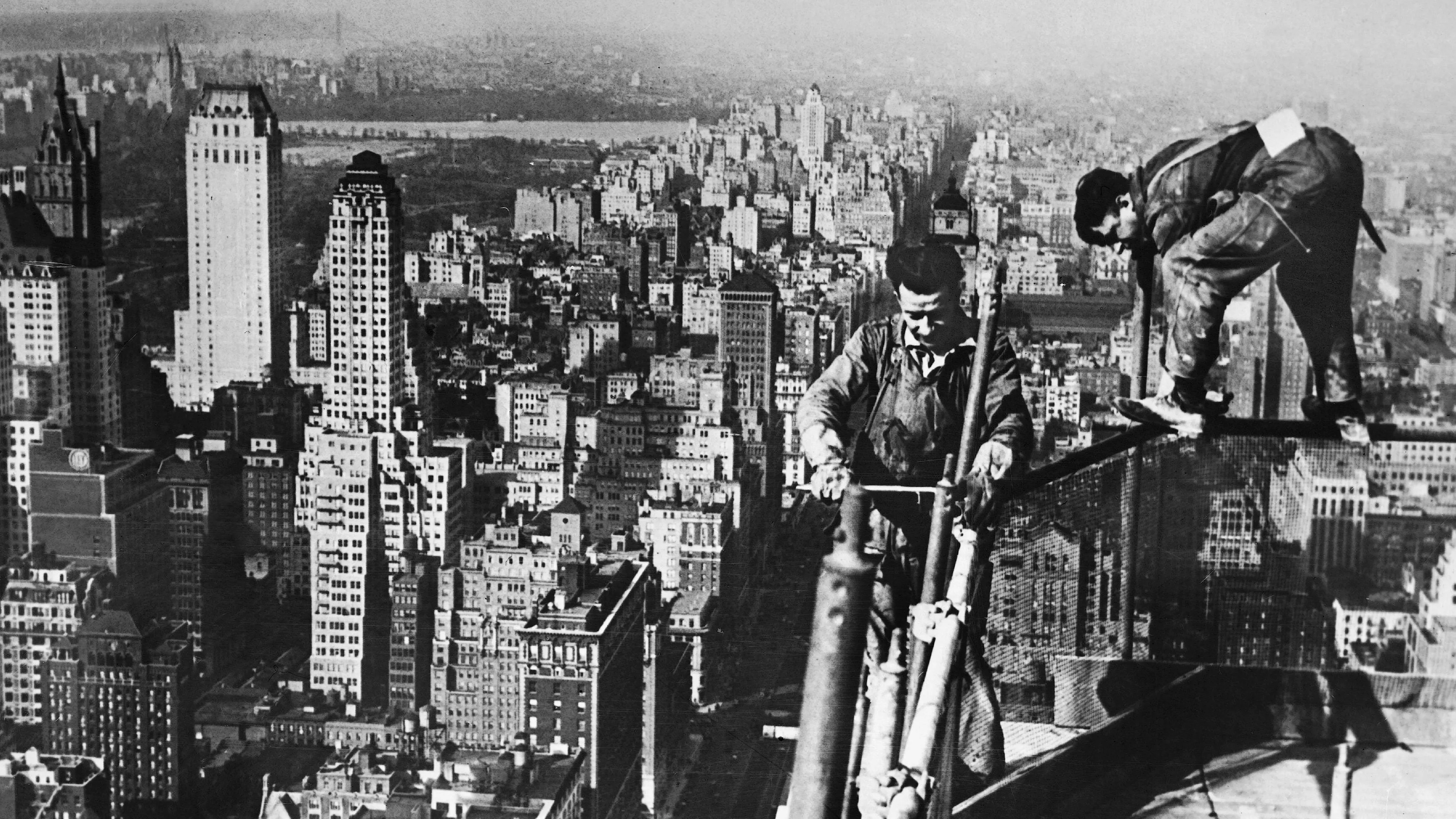
Speed defined ESB’s build: steel frames erected at up to 4.5 floors per week, with precision choreography across deliveries, rivets, and safety protocols of the era. It was not chaos — it was a ballet of cranes, hoists, and human rhythm.
Quick Facts
- Total construction time: ~410 days.
- Peak workforce: ~3,400 workers.
- Steel: ~57,000 tons; 10M bricks; 200,000 cubic feet of stone.
- Average floor progress at peak: 1 story per day (steel skeleton).
| System | Innovation |
|---|---|
| Prefabrication | Steel members arrived ready to rivet |
| Hoists | Material/men moves tuned by shift cadence |
| Scheduling | Daily output boards and micro‑targets |
| Safety | Evolving gear; netting, routines, and spotters |
Crew & Craft
- Mohawk ironworkers: balance, speed, and trust — a legendary high‑steel lineage.
- Riveting teams: heaters, tossers, catchers, buckers — each with a role and rhythm.
- Decking crews: laid floors almost as fast as steel rose.
- Elevator installers: turning vertical shafts into arteries.
Did you know? A tossed hot rivet could arc 50–75 feet — caught in a bucket, then hammered home in seconds.
A Day in Motion
- Dawn deliveries staged on 5th Ave.
- Steel hoisted and pinned; temporary bolts before rivets.
- Rivet fires lit; teams cycle floor to floor.
- Decking and perimeter safety follow the steel.
Logistics at Scale
- Staged deliveries to 5th Avenue; traffic managers orchestrated the curb ballet.
- Prefabricated steel — minimal on‑site fit‑ups; faster erection.
- Daily production targets per crew; micro‑scheduling kept pace.
- Weather windows exploited; wind management dictated task choice.
Safety evolved rapidly, but the height risks were real — the heroism was in routine done right.
Numbers That Tell the Story
| Metric | Peak Rate |
|---|---|
| Steel fastening | 10,000+ rivets/day |
| Concrete | Hundreds of cubic yards/day |
| Elevators | Dozens of installers across multiple shafts |
See the Story
- Photographs of beam walkers, skyline lunches, and winches tell the tale.
- Exhibits on lower floors map the ascent floor‑by‑floor.
- Look for the sequencing diagrams — they make the speed legible.
Bottom Line
ESB’s build was speed with discipline: a city pushing limits and inventing modern project management as it climbed. It’s the template for how the modern metropolis assembled itself.
About the Author

NYC Observatory Expert
I put this guide together to make your Empire State Building visit simple, insightful, and full of New York tips.
Tags
Comments (0)
Loading comments...